A 13-card example
In a common 13-card format, a declaration needs at least two sequences, including one pure sequence. All remaining cards must form valid groups. Rules can vary by table, so check the game’s own instructions.
Four groups, all 13 cards
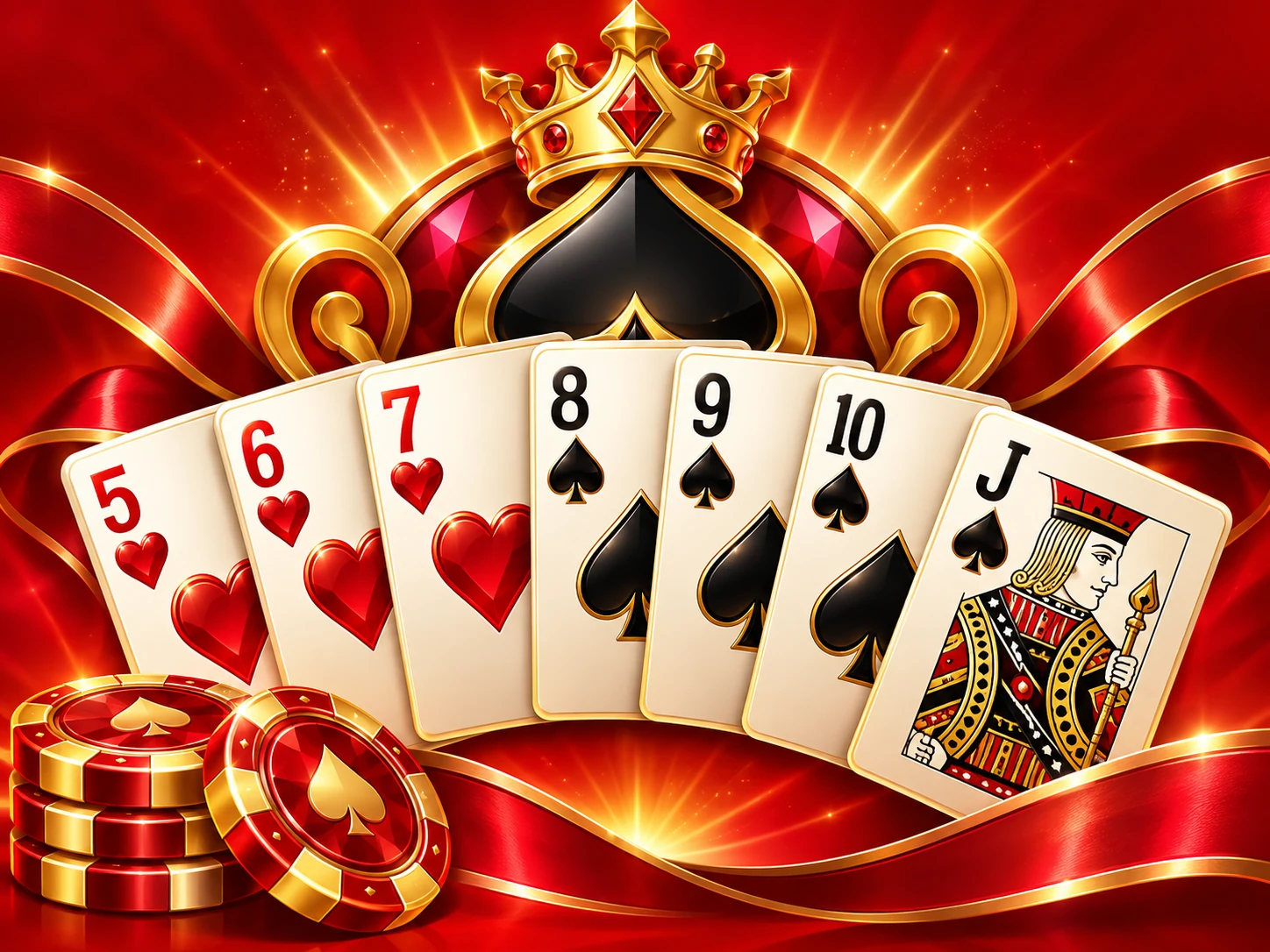
This illustrative hand has two pure sequences and two sets. No joker is used.
The first group is a sequence of consecutive hearts; the second is a sequence of consecutive spades. Each set has the same rank in different suits. Review the selected table’s declaration and scoring rules before playing.
Read more about sequencesHow to play Master Rummy
- 01
Arrange your hand
Group your 13 cards into potential sequences and sets. Keep an eye on the printed joker and the selected wild joker.
- 02
Draw, then discard
On your turn, take one card from the closed deck or discard pile, then discard one card. Work towards a complete valid hand.
- 03
Build two sequences
A valid declaration needs at least two sequences, including one pure sequence without a substitute joker. The remaining cards must form valid sequences or sets.
- 04
Check before declaring
Account for all 13 cards and check every group. An invalid declaration can carry a penalty under the table rules.
Sequences, sets & declarations
Pure sequence
Three or more consecutive cards of the same suit, without a substitute joker.
Impure sequence
A consecutive same-suit group completed using a joker.
Set
Three or four cards of the same rank in different suits.
Valid declaration
All 13 cards in valid groups, with at least two sequences and at least one pure sequence.
A pure sequence
Consecutive cards of one suit, with no substitute joker.
Master Rummy variants
Points Rummy
Each deal is settled using the point value and scoring rules shown at the table. A clear choice for a single-deal format.
Pool Rummy (101 / 201)
Scores accumulate over multiple deals. Players remain in the pool until they reach the stated elimination threshold.
Deals Rummy
A fixed number of deals determines the result. Follow the chip distribution and scoring rules for that table.
Tips from the tables
- Prioritise a pure sequence before building the rest of your hand.
- Keep flexible connected cards and review isolated high-value cards.
- Track visible discards; they can help you understand which cards are useful.
- Recheck the joker and every group before declaring.
Tables, stakes and timers
Before joining a table or round, review the format, entry conditions, permitted stakes and action timer. They can differ between games and variants.
Check the app’s current rules for limits, timing and availability. This guide does not set a minimum stake or confirm an available paid-play format.
Choose limits that you are comfortable with. Never increase your spend to recover a previous loss.
Scoring & table rules
Read the table’s shuffle, scoring and declaration rules. Check how jokers and penalties are handled before joining a deal.
Common mistakes
- Declaring before completing a pure sequence.
- Using duplicate cards of the same suit in a set.
- Holding isolated high-value cards without a plan.
- Assuming a joker makes every grouping valid.
Master Rummy glossary
- Drop
- Leaving a deal under the table’s stated drop rules.
- Wild joker
- The selected rank that can substitute for another card.
- Meld
- A valid group of cards: a sequence or a set.
- Deadwood
- Cards that are not part of a valid group.
- Show
- Submitting your arranged hand for validation.